
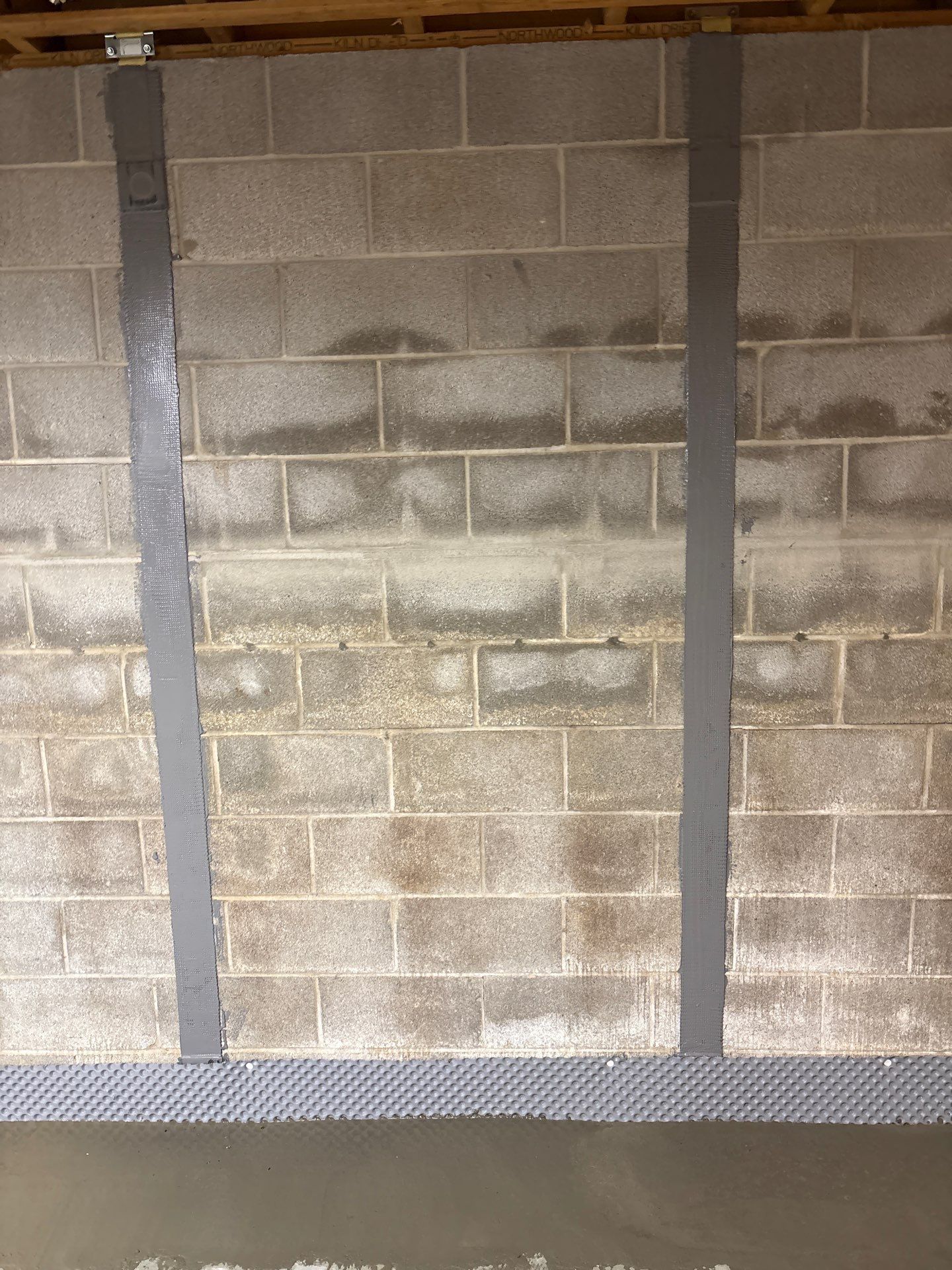
Finding a crack in your foundation is unsettling, and the first instinct is often to wonder how serious it is. A crack alone rarely answers that question. What helps most is a clear record of what you see, so the person evaluating it has real information to work from instead of memory and guesswork.
This guide walks Kentucky homeowners through what to photograph, measure and write down before an inspection, and what a professional evaluation generally considers.
Start by noting where the crack is
Write down exactly where you found it. Is it on an interior basement wall, an exterior wall, a floor slab, or a crawl space wall? Note which side of the house it is on and roughly how far it sits from a corner, window or door.
Location matters because cracks in different parts of a foundation can point to different conditions. A simple sketch of the wall or room with the crack marked on it is enough.
Photograph it the same way every time
Photos are the most useful thing you can bring to an inspection. A few habits make them far more useful:
- Take one wide shot that shows the whole wall or floor, so the crack can be placed in context.
- Take a close-up with a ruler or tape measure held beside the crack for scale.
- Add the date to each photo, either in the file name or with a note on your phone.
- Photograph from the same spot and angle each time you return to it.
Repeat the photos every couple of weeks if you can. Several dated images of the same crack show whether it looks different over time, which a single photo cannot.
Record what you can see and measure
Use a tape measure or a printed crack-width card to note the following:
- How long the crack is, and its approximate width at the widest point.
- Its direction: vertical, horizontal, diagonal, or a stair-step pattern along mortar joints in block or brick.
- Whether the two sides of the crack line up or one side sits slightly out from the other.
- Whether there is any staining, mineral residue or powdery buildup along it.
You do not need to interpret these details. Writing them down simply gives the inspector a starting point, and it lets you tell them, with dates, whether anything has changed.
Look for changes elsewhere in the house
Foundation concerns do not always stay at the foundation. While you are documenting the crack, walk through the home and note anything else that seems different:
- Doors or windows that have started to stick, rub or no longer latch.
- New gaps between walls and ceilings, trim, or cabinets.
- Cracks in drywall, especially near the corners of doors and windows.
- Floors that feel uneven or slope in one direction.
Write down when you first noticed each one. A rough timeline, even “sometime last spring,” is valuable.
Pay attention to moisture
Note any damp spots, water stains, musty smells or standing water near the crack, both inside and outside the house. Outside, look at how water moves around your foundation: where the gutters discharge, whether the ground slopes toward or away from the house, and whether downspouts end close to the wall.
Kentucky homes sit on soils that can swell and shrink with seasonal moisture, so it also helps to mention whether a crack seems to look different after heavy rain or a dry spell.
What a professional evaluation considers
An evaluation looks at the whole picture rather than one crack in isolation. Your documentation supports that process, because a professional will generally consider:
- The crack’s size, direction and pattern, and whether it appears to be changing.
- Where it sits in the structure and what it is attached to.
- Signs of movement elsewhere in the home, like the sticking doors and uneven floors you noted.
- Moisture and drainage conditions around the property.
- The type of foundation, such as poured concrete, block, or a crawl space.
Only an on-site evaluation can say what a crack means for your particular home.
What not to conclude from a crack
It is tempting to decide from a photo or an internet search whether a crack is minor or dangerous. Symptoms alone cannot establish the cause or whether a structure is safe. Some cracks are cosmetic, while others are worth a closer look, and telling them apart takes a trained eye and an in-person review.
The flip side is also true: a small crack is not automatically a reason to panic. The goal of documenting it is to replace worry with information.
Ready to have your foundation evaluated?
If you have found a crack, or if you are noticing other changes in your home, a professional evaluation is the next step. Bring your photos, measurements and notes, and share what you have observed. Learn more about our foundation repair services and basement wall repair, or see how we help homeowners in Lexington.