
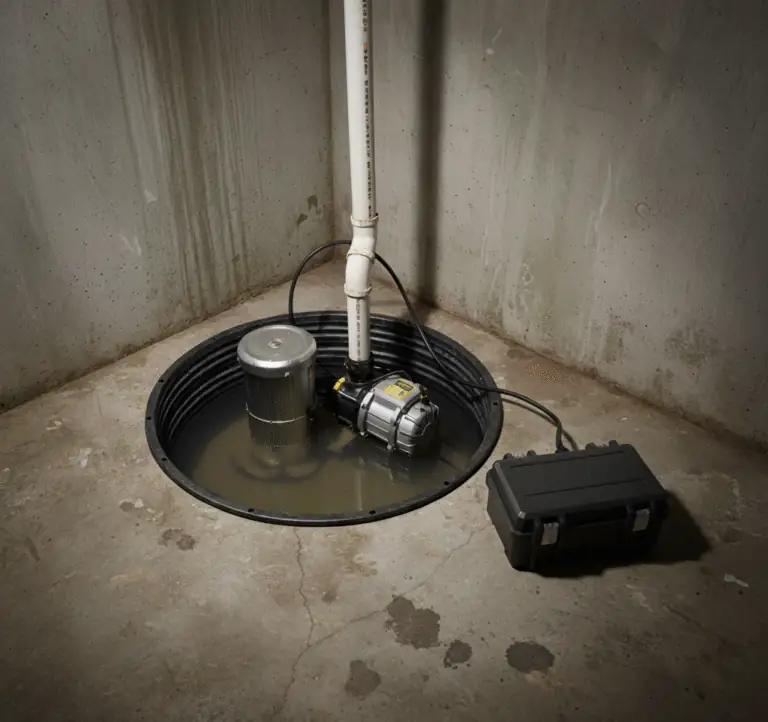
1. Water Collection in the Sump Pit
The system starts with the sump pit, a small, dug-out basin at the lowest point of your basement or crawlspace.
Groundwater, rain runoff, or even melting snow naturally flows into this pit through drain tiles, perforated pipes, or soil seepage.
Think of the pit as a “bucket” that catches water before it spreads across your basement floor.
2. Activation by Float Switch
Inside the pit, the sump pump is equipped with a float switch — a device that rises and falls with the water level.
When the water level is low, the pump stays off. Once the water reaches a preset level, the float switch flips on, signaling the pump to start working.
This automation means you don’t have to worry about turning the system on during heavy rains — it activates on its own.
3. Water Drainage
Once the float switch activates, the pump kicks into gear. It pulls water from the pit and pushes it through a discharge pipe that leads outside, usually at least 10–20 feet away from your foundation.
From there, the water drains safely into a storm drain, dry well, or sloped section of your yard where it won’t seep back toward your home.
4. Backflow Prevention
Many sump pumps also include a check valve in the discharge line. This one-way valve ensures water only flows out and never back into the pit, even after the pump shuts off.
5. Automatic Shut-Off
Once the pit is empty, the float switch lowers again, automatically shutting off the pump until the next time water collects.
Why Are Sump Pumps Important?
A sump pump isn’t just another piece of equipment in your basement — it’s a safeguard that protects your Louisville home, your health, and your wallet.
Here’s why having one makes such a big difference:
Prevents Basement Flooding
Basement flooding can ruin flooring, drywall, furniture, and anything you’ve stored downstairs. Even an inch of water can lead to thousands of dollars in repairs.
A sump pump is your frontline defense, automatically pumping water out before it becomes a flood, saving you from expensive restoration work.
Reduces Biological and Mildew Growth
Moisture is the perfect breeding ground for mold and mildew, which can spread quickly through your basement and into your home’s air system. This not only causes a musty smell but can also trigger allergies and respiratory issues. A sump pump keeps the space dry, helping maintain clean, breathable indoor air.
Protects Your Home’s Foundation
When water collects around your foundation, it increases hydrostatic pressure on basement walls and floors. Over time, this pressure can cause cracks, leaks, or even structural shifts. By directing water away from your foundation, a sump pump reduces this strain and extends the life of your home’s structure.
Increases Energy Efficiency
Moisture makes your basement damp and cooler, which can force your HVAC system to work harder to regulate indoor temperatures. A dry basement reduces humidity levels throughout your home, lowering energy costs.
Boosts Home Value and Marketability
For prospective buyers, a sump pump is a green flag. It signals that the home is protected against flooding and has been maintained with future safety in mind. This can add resale value and make your property more attractive in a competitive housing market.
Signs You Might Need a Sump Pump
1. Frequent Basement Flooding
If your basement takes on water every time it rains heavily or when snow melts, that’s the most obvious sign. Even small floods add up in repair costs and can cause lasting damage to walls, floors, and belongings. A sump pump provides automatic protection when water levels rise.
2. Standing Water After Storms
You don’t need a full-blown flood to have a problem. Puddles or damp spots in your basement after a storm show that water is entering but not draining properly. Left unchecked, this standing water can lead to mold, musty smells, and foundation problems.
3. Dampness and Musty Odors
A basement that always feels humid or smells like mildew is a red flag for moisture intrusion. Even if you can’t see visible water, excess moisture in the air is often the first stage of water damage — and a sump pump can keep that humidity under control.
4. Cracks in the Foundation
Over time, hydrostatic pressure from water build up may cause visible cracks in your foundation. These cracks let in even more water, creating a cycle of damage. A sump pump helps relieve the pressure by channeling water away before it causes harm.
5. Rising Humidity Upstairs
Moisture doesn’t just stay in the basement. If you notice your whole home feels sticky or your air conditioner seems to work harder than usual, basement moisture could be creeping upward. A sump pump keeps the source of that excess humidity under control.
Alternatives to a Sump Pump
While sump pumps are one of the most reliable ways to keep a basement dry, they’re not the only solution.
Here are some common alternatives:
French Drains
A French drain is a gravel-filled trench with a perforated pipe at the bottom that redirects water away from your foundation. It works by collecting groundwater and rainwater and channeling it to a safe drainage area.
Best for: Homes with persistent surface water issues or soggy yards.
Limitations: A French drain is great for exterior water management but typically works best with a sump pump rather than as a total replacement, especially if you have a basement prone to flooding.
Grading and Landscaping Solutions
Regrading soil so it slopes away from your house encourages water to drain elsewhere. Adding gutters, downspout extensions, and landscaping features like swales (shallow ditches) can also move water farther from the foundation.
Best for: Preventing minor water intrusion before it reaches the foundation.
Limitations: Won’t solve high water table issues or serious basement flooding.
Waterproofing Sealants and Membranes
Waterproof coatings or membranes applied to basement walls and floors can block small leaks and seepage. They create a barrier that resists moisture penetration.
Best for: Managing damp walls and minor leaks caused by porous concrete.
Limitations: This is more of a preventative measure — it won’t handle significant flooding or water pressure. Without proper drainage, water may still push through cracks over time.
Crawlspace Vapor Barriers
For homes with crawlspaces instead of basements, a vapor barrier — a heavy-duty plastic sheet installed over the ground — helps control moisture rising from the soil. It keeps crawlspaces drier, reducing humidity and biological growth.
Best for: Homes with crawlspace dampness, mold, or musty odors.
Limitations: Vapor barriers don’t pump out standing water; they’re for moisture control, not flood prevention.
Backup Drainage Systems
Systems like dry wells or exterior drain tiles redirect water from around your foundation to underground gravel-filled basins or municipal storm drains. They give water somewhere else to go instead of pooling near your home.
Best for: Homes with heavy exterior water flow or poor soil drainage.
Limitations: Installation can be invasive and costly. Like French drains, they work best when paired with a sump pump for full protection.
Keep Your Basement Dry
A sump pump is more than just a convenience, it’s protection for your Lexington home, your belongings, and your family’s health. By preventing flooding, reducing biological growth, and safeguarding your foundation, sump pumps give homeowners lasting peace of mind.
If you’ve noticed signs of water damage or just want to be proactive, don’t wait until the next storm hits.
Contact Bluegrass Foundation Repair today for sump pump inspection, installation, or crawlspace repair — and keep your basement safe and dry year-round.