
You head downstairs and something feels off. Maybe it’s a damp smell. Maybe there’s a dark stain spreading along the base of the wall. Or maybe you’re standing in a puddle that wasn’t there yesterday.
Water intrusion in your basement isn’t just an inconvenience. Left alone, it leads to biological growth, structural concerns, and damage that gets more expensive to address the longer you wait. The good news is that most basement water problems have identifiable causes, and once you know what’s driving it, the right repair solution becomes a lot clearer.
If you’re a Kentucky homeowner dealing with a wet basement, here’s what you need to know.
What Causes Water Intrusion in Kentucky Basements?
Kentucky’s climate and geology create a unique set of challenges for basements. Heavy spring and fall rains, humid summers, and clay-rich soils that expand and contract with the seasons all play a role. Here are the most common reasons water ends up where it shouldn’t.
Hydrostatic Pressure
When the soil around your foundation becomes saturated after a heavy rain, it expands and pushes against your basement walls. This is called hydrostatic pressure, and it’s one of the biggest drivers of water intrusion in Kentucky. The pressure forces water through any small crack, joint, or gap in the foundation. Homes in low-lying areas or near creeks and rivers deal with this more frequently.
Foundation Cracks
As your home settles over time, small cracks can develop in the foundation walls and floor. In Kentucky’s clay soils, that settlement can be more pronounced because the ground is constantly shifting. Even hairline foundation cracks can let water in, and they tend to get worse over time, not better.
Poor Exterior Drainage
If the grading around your home slopes toward the foundation instead of away from it, rainwater collects right where you don’t want it. Clogged gutters, short downspouts, and missing splash blocks make the problem worse. A lot of Kentucky homes, especially older ones in neighborhoods like Louisville’s Highlands, Lexington’s Southland, or Bowling Green’s historic district, were built before modern drainage standards.
Failed or Missing Sump Pump
A sump pump is your basement’s last line of defense against water intrusion. If yours has failed, lost power during a storm, or was never installed in the first place, water has nowhere to go but up through the floor. Kentucky’s storm season can overwhelm an aging or undersized pump fast.
Wall & Floor Joint Seepage
The joint where your basement floor meets the wall (called the cove joint) is one of the most common entry points for water. It’s not a crack exactly, it’s a construction joint, and it’s vulnerable to hydrostatic pressure. You’ll often see a line of moisture or mineral deposits right along this seam.
Warning Signs To Watch For
Basement water problems don’t always start with visible water intrusion. More often, the early signs are subtle. Here’s what to keep an eye on:
- Damp or musty odors that linger even when the basement looks dry
- White mineral deposits (efflorescence) on walls or the floor
- Peeling paint or bubbling drywall near the base of basement walls
- Visible moisture or staining along walls, joints, or the floor
- Biological growth on walls, stored items, or in corners
- A sump pump that runs constantly or won’t turn off after rain
- Standing water after storms, even small amounts
If you’re seeing any of these, the problem is already in motion. Early attention prevents it from becoming a much larger, more expensive issue.
Noticing any of these signs? Contact Bluegrass Foundation Repair for a free evaluation before the damage spreads.
Why Kentucky Homes Are Especially Vulnerable
It’s not your imagination. Kentucky really does make basement water problems worse than most states. Here’s why:
- Clay-heavy soils across much of the state hold moisture after rain and swell against foundation walls. When they dry out in summer, they shrink and pull away, creating channels for the next rain to flow directly toward your foundation.
- Seasonal weather swings are another factor. Kentucky can go from heavy rains to bone-dry conditions in the same month. This constant wet-dry cycle accelerates foundation movement and opens up new entry points for water.
- Aging housing stock in cities like Louisville, Lexington, and Frankfort means many basements were built without modern water management systems. Homes from the mid-century era often have no interior drainage, no sump pump, and minimal exterior waterproofing.
When To Call a Professional
Not every wet basement requires a major repair. But there are situations where calling in a professional is the right move:
- Water appears after every significant rain
- You’ve tried improving drainage and grading but the problem persists
- You see foundation cracks that are growing or new cracks appearing
- Your sump pump can’t keep up or has failed
- You notice biological growth that keeps coming back
- The moisture is affecting your floors, drywall, or stored belongings
At Bluegrass Foundation Repair, we start every project with a thorough evaluation of your basement, your foundation, and your property’s drainage conditions. We figure out what’s causing the water intrusion, then build a custom moisture control system designed to handle it long-term.
How Bluegrass Handles Basement Water Problems
Every home is different, so every repair solution we recommend is tailored to what’s actually happening at your property. Depending on the cause and severity, your water management system might include:
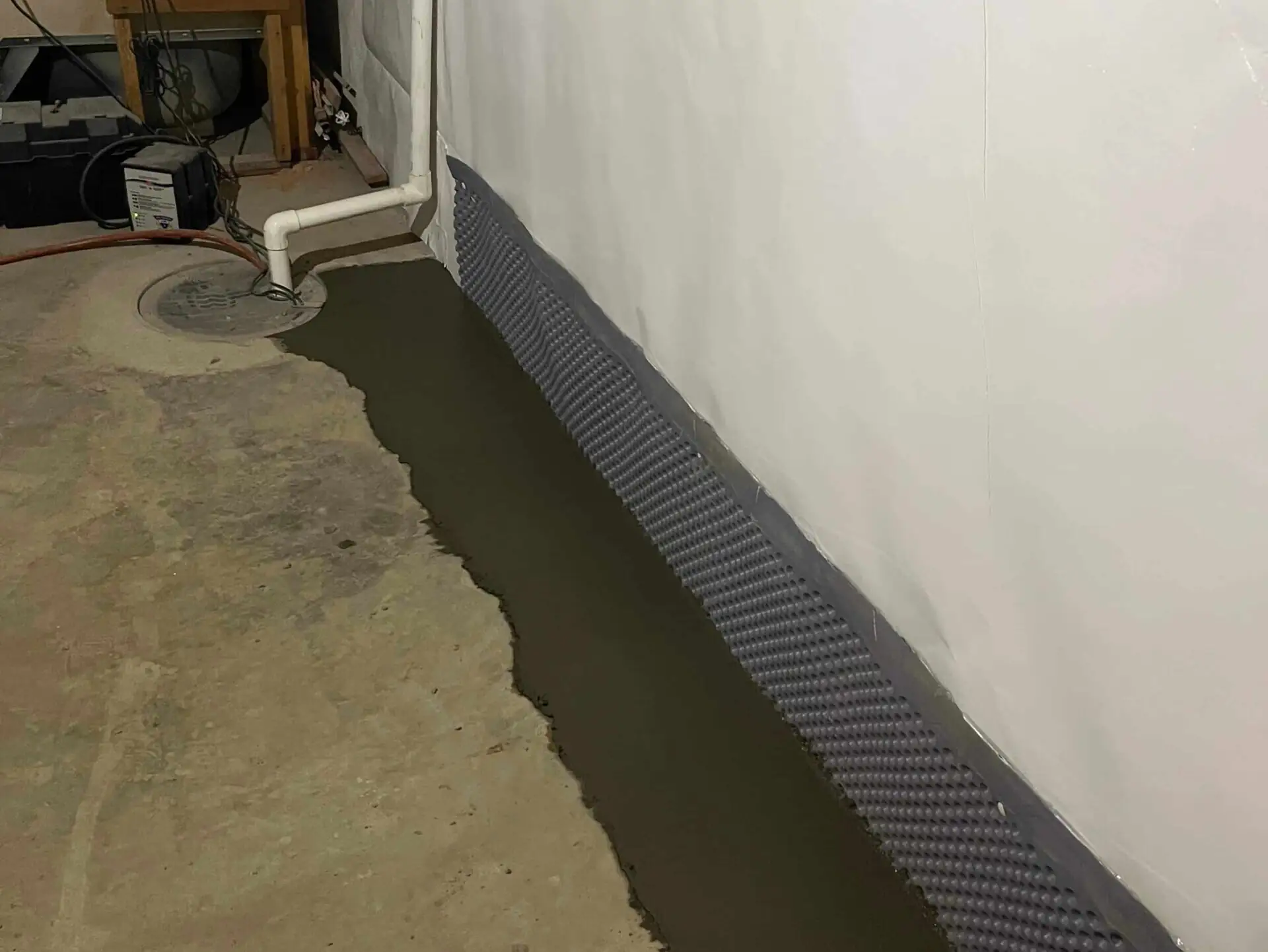
- Interior drainage channels that capture water before it reaches your living space
- Sump pump installation with industrial-grade systems built for Kentucky conditions
- Dehumidification to control and manage humidity levels year-round
- Foundation crack repair to seal active entry points
- Exterior drainage improvements when the problem starts outside the walls
We use 100% American-made products, provide transparent pricing, and back most repair solutions with a lifetime warranty. We’re locally owned, fully licensed and insured, and we’ve been serving Kentucky homeowners for years.
Schedule your free evaluation and let’s figure out what’s going on beneath your home.
FAQs About Basement Water Intrusion
Is a little water in my basement normal?
It’s common in Kentucky, but it’s not something to ignore. Even minor moisture encourages biological growth and can deteriorate structural components over time. If water is showing up regularly, it’s worth getting an evaluation.
Will waterproofing paint solve my basement water problem?
Waterproofing paint is a surface-level product that doesn’t address the actual source of water intrusion. It may mask symptoms temporarily, but hydrostatic pressure, drainage issues, and foundation cracks need to be addressed with engineered repair solutions.
How much does a water management system cost?
It depends on the cause, the size of your basement, and what systems are needed. We provide transparent pricing during your free evaluation so you know exactly what to expect before any work begins.
Can basement water intrusion cause foundation damage?
Yes. Persistent moisture weakens the soil supporting your foundation, accelerates settlement, and can compromise basement wall integrity. Addressing water intrusion early helps protect the entire foundation system. If you’re seeing signs of both, our team can evaluate your foundation at the same time.
Does Bluegrass Foundation Repair offer financing?
We do. We partner with GreenSky® to offer flexible financing options including no-interest plans, so you can protect your home without the financial strain.
What about crawlspace moisture problems?
Crawlspace moisture and basement water intrusion often share the same causes. If your home has a crawlspace that’s damp or showing signs of biological growth, we address that too with encapsulation systems, drainage, and dehumidification.